
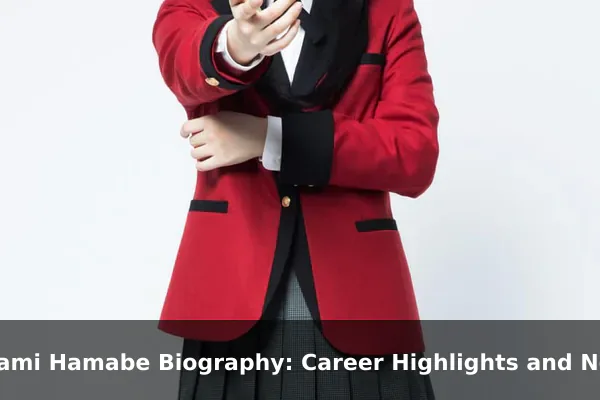
Minami Hamabe has become one of the most recognizable names in contemporary Japanese cinema, admired for her versatility, emotional depth, and a screen presence that feels both grounded and luminous. Over the span of a decade she has moved from a promising newcomer in youth dramas to a leading actress in major studio productions, including projects that have drawn international attention. For readers interested in biografi artis, or the life stories of performers, her career offers a clear example of how disciplined work, careful role selection, and strong agency backing can shape a lasting public profile.
This biography traces Minami Hamabe’s path using verified milestones, credited film roles, and official award recognition rather than rumor or speculation. The goal is to present an accurate, fact-checked overview of her career highlights and notable films, anchored where possible to her official agency profile and recognized industry sources. Because schedules, projects, and announcements can change over time, this article focuses on documented achievements and encourages readers to consult official channels for the most current updates.

Early Life and Path Into Entertainment
Minami Hamabe was born on August 29, 2000, in Ishikawa Prefecture, Japan. Like many performers who enter the industry young, she began acting during her early teenage years, gradually building experience through screen roles before stepping into more prominent parts. She is affiliated with Toho Entertainment, one of Japan’s well-established talent agencies, which has played a significant role in connecting her with major film and television projects throughout her career.
Her entry into entertainment came through an audition process, a common route for young Japanese actors who are scouted or selected for their potential rather than arriving with prior fame. From these early beginnings, she developed a reputation for taking her craft seriously, a trait that observers and reviewers have frequently noted as her roles grew more demanding.
Building Early Experience
Before her breakthrough, Minami Hamabe accumulated experience across a variety of smaller and supporting roles. This period is important for understanding her later success, because it allowed her to refine her on-camera technique and adapt to different genres. Several patterns from this stage would continue throughout her career:
- Youth-focused roles: She frequently appeared in stories centered on young protagonists, which suited her age and helped her connect with younger audiences.
- Emotional drama: Even early on, she gravitated toward parts that required conveying vulnerability and inner conflict.
- Consistent agency support: Backing from an established agency helped position her for high-profile auditions and productions.
Breakthrough Role and Early Recognition
The turning point in Minami Hamabe’s career came with the 2017 live-action film Let Me Eat Your Pancreas (Kimi no Suizo wo Tabetai), based on the popular novel of the same name. In this emotionally driven drama, she portrayed a terminally ill student whose relationship with a reserved classmate forms the heart of the story. The role demanded a careful balance of warmth, humor, and sorrow, and her performance was widely praised for its sensitivity.
This film is widely regarded as the project that elevated her from a rising young actress to a recognized leading performer. The emotional resonance of the story, combined with her committed portrayal, helped the film connect strongly with audiences and reviewers alike.
Japan Academy Film Prize Recognition
Her work in Let Me Eat Your Pancreas was connected to formal industry recognition. She received the Newcomer of the Year (Newcomer Actor) honor at the 41st Japan Academy Film Prize, an award that highlights emerging talent within the Japanese film industry. This recognition is meaningful because it came from an official awards body rather than informal popularity rankings, signaling that her abilities were acknowledged by industry professionals at an early stage in her career.
Career Growth Across Film and Television
Following her breakthrough, Minami Hamabe steadily expanded her body of work across both film and television. Rather than relying on a single type of role, she pursued a range of characters that allowed her to demonstrate flexibility. This willingness to take on varied parts has been a defining feature of her professional growth.
Her transition from a celebrated newcomer to an established leading actress did not happen through one project alone. Instead, it developed through a series of credited roles that gradually broadened her audience and reinforced her reputation for reliability and range. Some of the qualities that supported this growth include:
- Genre variety: Moving between heartfelt dramas, mainstream entertainment, and larger studio productions.
- Strong collaborations: Working with respected directors and production teams on high-visibility projects.
- Sustained visibility: Maintaining a steady output of work that kept her in the public eye.
Balancing Mainstream Appeal and Craft
One reason Minami Hamabe’s career has remained durable is her ability to appeal to broad audiences while still earning respect for her craft. Mainstream commercial films can sometimes overshadow an actor’s artistic credibility, but she has largely managed to maintain both. This balance has made her an attractive choice for producers seeking performers who can anchor large projects while delivering nuanced performances.
Notable Films That Shaped Her Public Image
Several films stand out as defining moments in Minami Hamabe’s career. Each contributed to her public image in a distinct way, showcasing different facets of her ability and expanding the kinds of stories audiences associate with her.

Let Me Eat Your Pancreas
As her breakthrough title, Let Me Eat Your Pancreas established her as an actress capable of carrying an emotionally intense narrative. The role positioned her as a face of heartfelt youth drama, a genre that remains popular in Japanese cinema and that helped build her early fan base.
Shin Kamen Rider
In 2023, she took part in Shin Kamen Rider, a film connected to the long-running and culturally significant Kamen Rider franchise. This project demonstrated her willingness to engage with genre and action-oriented storytelling, a notable shift from the quieter dramas that first defined her. Participating in a title tied to such an established franchise also broadened her exposure to dedicated fan communities.
Godzilla Minus One
Also in 2023, Minami Hamabe appeared in Godzilla Minus One, a major Toho production that became one of the most internationally discussed Japanese films of its era. Her involvement in this film marked a significant moment in her career, linking her name to a globally recognized franchise and a critically acclaimed production.
Godzilla Minus One and International Visibility
Among all her projects, Godzilla Minus One arguably did the most to extend Minami Hamabe’s recognition beyond Japan. The film, produced by Toho, drew widespread international attention for its storytelling and production quality, reaching audiences far outside the typical reach of domestic Japanese dramas.
Because the Godzilla franchise has a long global history, the film’s success introduced her work to viewers who might not have encountered her earlier projects. According to the film’s official materials, she was part of a cast featured in a story set against a postwar backdrop, contributing to a narrative that emphasized human resilience alongside the iconic creature spectacle.
Why International Exposure Matters
For a Japanese actress, appearing in a globally distributed and critically celebrated film can be transformative. The benefits of this kind of exposure include:
- Wider recognition: Introducing her name and work to international audiences and film communities.
- Franchise association: Connecting her to a property with decades of cultural weight.
- Career longevity: Strengthening her profile for future opportunities both at home and abroad.
Awards, Honors, and Career Milestones
Minami Hamabe’s career has been marked by formal recognition at notable points. While popularity and box office success are part of any leading actor’s story, official awards provide a more reliable measure of professional standing. Her documented honors include recognition tied to major productions and the official Japan Academy Film Prize ceremonies.
Key milestones connected to award recognition include:
- Newcomer of the Year at the 41st Japan Academy Film Prize, associated with her breakthrough in Let Me Eat Your Pancreas.
- Career-highlight recognition connected to the 47th Japan Academy Film Prize period, tied to her involvement in acclaimed 2023 productions such as Godzilla Minus One and Shin Kamen Rider.
Readers seeking the full and precise list of nominations and wins should consult official awards records, as award databases are continually updated and represent the most authoritative source for this information. This cautious approach helps ensure accuracy when discussing honors that can be easily misreported.
Acting Style and Screen Presence
Beyond her filmography, Minami Hamabe is often discussed for the qualities she brings to her performances. While analysis of acting style is inherently interpretive, certain recurring strengths have been noted by reviewers and audiences across her body of work.
Emotional Restraint and Subtlety
One frequently cited characteristic is her ability to convey emotion through restraint rather than excess. In dramatic roles, she often communicates feeling through small expressions and controlled delivery, an approach that can make emotional moments feel more authentic and earned.
Genre Flexibility
Her movement between intimate dramas, franchise films, and large-scale productions demonstrates a flexibility that not all performers achieve. This adaptability allows her to remain relevant across changing audience tastes and to participate in a wide variety of projects.
Mainstream Appeal
Finally, she carries a broad appeal that makes her recognizable to general audiences. This combination of craft and accessibility is part of why she continues to be cast in prominent roles. It is worth distinguishing these observations as analysis rather than fact, since perceptions of style naturally vary among viewers and critics.
Why Minami Hamabe Remains a Name to Watch
Minami Hamabe’s career illustrates a steady and deliberate rise, built on a foundation of strong early work, a defining breakthrough, and participation in landmark productions that expanded her reach. From Let Me Eat Your Pancreas to Shin Kamen Rider and Godzilla Minus One, her filmography reflects both artistic ambition and broad audience appeal.
As she continues her career, she remains well positioned to take on new and varied roles. Her established reputation, agency backing, and proven versatility suggest continued relevance in Japanese cinema and potentially beyond. For the most accurate and current information about her ongoing and upcoming projects, readers are encouraged to check her official agency profile and verified industry sources, since the entertainment landscape can shift quickly.
Ultimately, the story of Minami Hamabe is one of consistent growth grounded in genuine talent. By focusing on her verified milestones and notable films, this biography aims to offer an accurate, respectful, and useful portrait of an actress whose career continues to unfold in compelling ways.
Official references
- Toho Entertainment – Minami Hamabe profile – Official agency profile for verified biographical details, awards, schedules, and career history.
- JFDB – HAMABE Minami – Japanese film industry database useful for cross-checking credited film roles in English and Japanese.
- Japan Academy Film Prize – 41st Awards – Official awards source for her Newcomer Actor recognition connected with Let Me Eat Your Pancreas.
- Japan Academy Film Prize – 47th Awards – Official awards source for career-highlight honors tied to Godzilla Minus One and Shin Kamen Rider.
- Godzilla Minus One official website – Official Toho film page for cast and production details on one of her major international roles.
